
How to Prepare for Your First ACQS 2025 Audit: A Step-by-Step Guide
Compliance
28 July 2026
Performance assessments under the Strengthened Aged Care Quality Standards are fundamentally different from the old accreditation audits. This step-by-step guide covers what to expect, how to prepare your evidence, and how to get your team audit-ready.
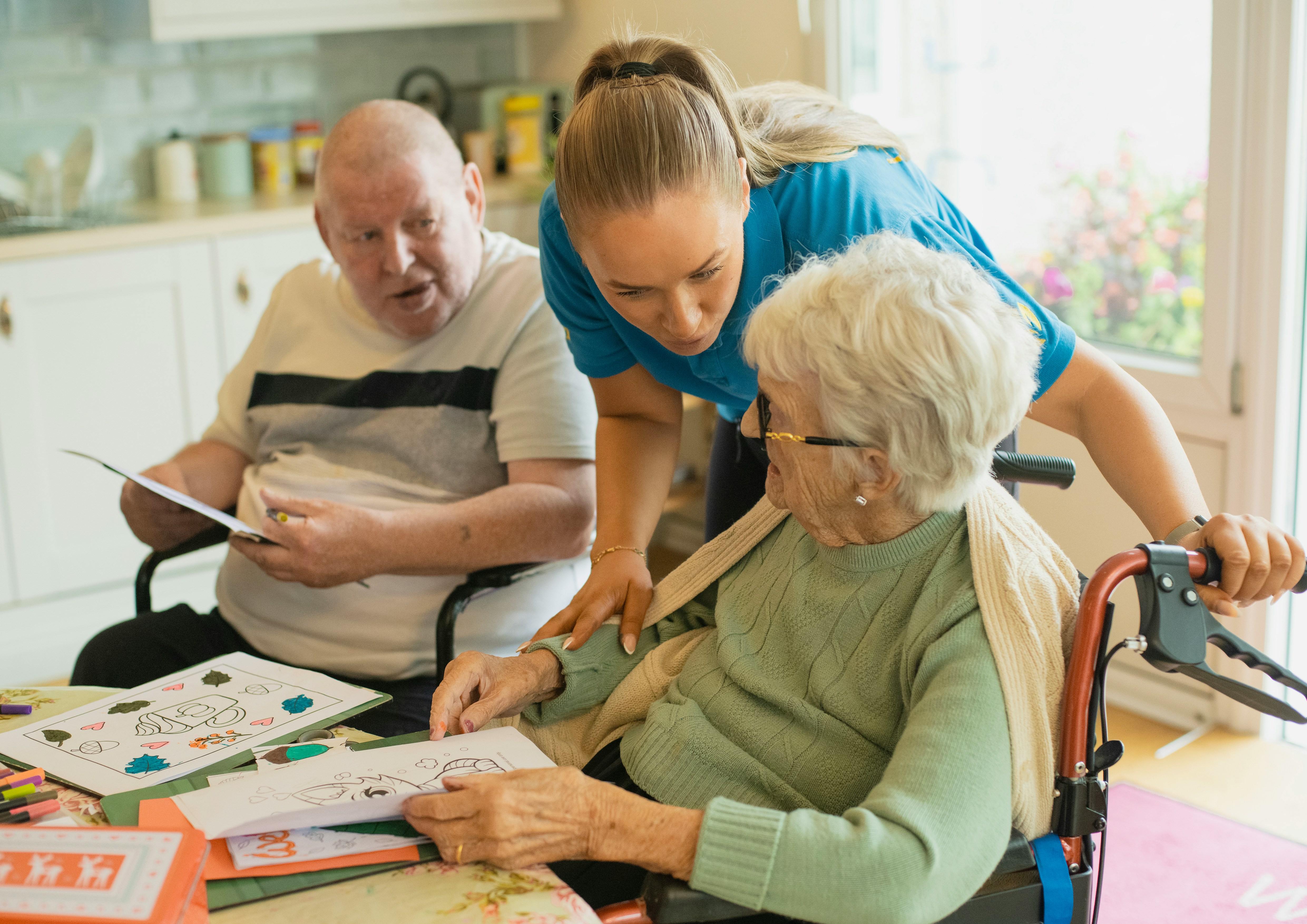
If your next compliance assessment will be your first under the Strengthened Aged Care quality standards (ACQS), you are not alone in feeling uncertain about what to expect. The assessment model has changed significantly from the old accreditation process, and the evidence requirements are more rigorous.
This guide walks you through the practical steps to prepare your organisation, your team, and your evidence for a successful ACQS 2025 performance assessment.
🛠️ Try our free ACQS 2025 Self-Assessment
Run a quick self-assessment against all 7 Strengthened Aged Care Quality Standards to identify your biggest compliance gaps.
What Is Different About ACQS Assessments?
Before diving into preparation, it helps to understand how the new assessment model differs from what you are used to.
Old model (accreditation): Scheduled every three years with advance notice. Assessment teams reviewed documentation and conducted site visits over several days. The focus was heavily on policies and procedures — having the right documents satisfied many requirements.
New model (performance assessment): The Commission conducts ongoing monitoring supplemented by scheduled performance assessments. Assessment teams evaluate outcomes, not just processes. They want to see that your systems produce measurable results for the people in your care.
Key differences to prepare for:
Evidence of outcomes, not just policies — assessors will ask "show me the data" not just "show me the policy"
Staff interviews are more rigorous — frontline staff will be asked how they apply policies in practice
Consumer interviews — residents and families will be asked about their lived experience
Unannounced elements — some assessment activities may occur without advance notice
Continuous data — assessors arrive having already reviewed your SIRS, QI, care minutes, and complaints data
Step 1: Conduct a Self-Assessment Against All 7 Standards
Start with a structured, honest self-assessment. Go through each of the 7 standards and their requirements, and rate your organisation against three questions:
Do we meet this requirement? (Yes / Partially / No)
What evidence do we have? (Specific documents, data, systems)
Is the evidence current? (Within the last 12 months, accessible on demand)
Be ruthless in this assessment. The worst outcome is thinking you are compliant and being surprised during a performance assessment. It is far better to identify gaps now and address them.
Common gaps providers find:
Evidence exists but is scattered across multiple systems, email inboxes, and shared drives
Policies are in place but outcome data showing they work is missing
clinical governance reporting to the board is infrequent or superficial
Diversity and cultural safety practices are undocumented
Food and nutrition evidence beyond menus is limited
Step 2: Build Your Evidence Framework
Once you know where your gaps are, build a structured evidence framework that maps evidence to each standard and requirement.
For each requirement, you need:
Policy evidence — the documented policy or procedure (this is baseline)
Implementation evidence — proof the policy is being followed in practice (training records, audit results, workflow logs)
Outcome evidence — data showing the policy produces positive results (quality indicators, trend data, resident feedback, incident analysis)
Improvement evidence — actions taken to address gaps and improve over time (QI project records, action plans, follow-up results)
This four-layer model — policy, implementation, outcomes, improvement — is the framework assessors use. If you can produce evidence at all four layers for every major requirement, you are in strong shape.
Tip: Cross-reference your evidence. One piece of evidence often supports multiple standards. A clinical incident analysis report, for example, supports Standard 2 (governance), Standard 3 (clinical care), and Standard 5 (feedback). Mapping these connections saves time and demonstrates integrated quality management.
Step 3: Get Your Data House in Order
Assessors will arrive having already reviewed your mandatory reporting data. Make sure your internal view of this data matches what the Commission sees.
Review and prepare:
SIRS data — Incident reports, response timelines, trend analysis, system-level actions taken. Can you explain any spikes or patterns?
Quality Indicators — Your quarterly QI submissions, benchmarking against national averages, and actions taken where you are above average on adverse indicators
care minutes — Actual staffing against mandated minimums, by facility. If you have had periods of non-compliance, what actions did you take?
Restrictive practices — Register of current restrictive practices, behaviour support plans, evidence of regular review and reduction efforts
Complaints data — Volume, themes, resolution times, and — critically — evidence that complaints have driven service improvements
The narrative matters: Assessors do not expect perfection. They expect transparency, accountability, and evidence of continuous improvement. If your falls rate increased last quarter, they want to see that you identified it, analysed the causes, implemented changes, and are tracking the impact. That story — identify, analyse, act, measure — is the core of what assessors look for.
Step 4: Prepare Your Team
Your staff are your most important assessment asset — or your biggest risk. Assessors will interview staff at all levels, from executives to frontline carers.
Leadership team preparation:
Can your CEO or GM clearly articulate the organisation's quality and safety priorities?
Can your clinical governance lead explain how clinical risks are identified, escalated, and managed?
Can your board chair describe how the board provides oversight of care quality?
Frontline staff preparation:
Do care staff know the key quality standards relevant to their role?
Can they explain how they provide person-centred care in practice (not just recite a definition)?
Do they know how to escalate concerns and report incidents?
Can they give real examples of how they have responded to individual resident preferences?
Important: Do not coach staff with scripted answers. Assessors can tell. Instead, make sure your team genuinely understands the principles and can speak from their own experience. Regular quality huddles, case discussions, and reflective practice sessions are far more effective preparation than last-minute briefings.
Step 5: Prepare Your Consumers
Assessors will speak with residents, their families, and their representatives. This is one area many providers overlook in their preparation.
What assessors ask consumers:
Do you feel safe here?
Do staff treat you with dignity and respect?
Are your preferences and choices respected?
Do you know how to make a complaint?
Have you noticed improvements over time?
You cannot script these conversations, and you should not try. What you can do is ensure that the care experience you deliver every day is genuinely person-centred, respectful, and responsive. If it is, consumer interviews will reflect that naturally.
What you can prepare: ensure residents and families know that an assessment is happening, that assessors may approach them for a conversation, and that they are encouraged to share their honest experience.
Step 6: Run a Mock Assessment
Two to four weeks before your expected assessment, run a mock assessment. This should be as close to the real thing as possible.
A good mock assessment includes:
An independent assessor (external consultant, or a senior leader from a different site)
Document review — can you produce requested evidence within 30 minutes?
Staff interviews — do staff give confident, authentic answers?
Site walkthrough — are the physical environment, infection control, and food service standards evident?
Data review — can you explain your QI, SIRS, and care minutes data with a coherent narrative?
Document the findings from your mock assessment and create an action plan for any gaps. This serves double duty — it fixes the gaps and creates evidence of continuous improvement (which assessors love to see).
The Technology Question
If your preparation process reveals that evidence is scattered, data is hard to consolidate, and producing an audit-ready evidence pack takes days rather than minutes — you have a systems problem, not just a preparation problem.
Purpose-built compliance platforms like Willow exist specifically to solve this. By connecting to your existing clinical, HR, training, and incident management systems, Willow pulls compliance evidence into one place, maps it across all 7 ACQS standards, identifies gaps automatically, and keeps you continuously audit-ready.
The providers who perform best in assessments are not the ones who prepare the hardest in the weeks before. They are the ones whose systems maintain audit readiness every day.
Want to see how Willow can transform your audit preparation? Book a demo and see the platform in action.
🛠️ Try our free ACQS 2025 Self-Assessment
Run a quick self-assessment against all 7 Strengthened Aged Care Quality Standards to identify your biggest compliance gaps.
Written by

James Driscoll
Writer
Latest Articles & Guides
Stay informed with the latest guides and news.


Ready to Move From Reactive to Continuous Compliance?
See how Willow supports structured governance, real-time monitoring, and audit-ready operations.