
ACQS 2025
The Complete Guide to Aged Care Quality Standards in Australia
The Strengthened Aged Care Quality Standards, known as ACQS 2025, represent the most significant transformation of aged care regulation in Australian history.
Effective from 1 July 2025, these standards replace the previous 2018 framework with a fundamentally different approach that puts continuous compliance, consumer outcomes, and accountability at the centre of how aged care quality is measured and assessed.
For aged care providers, understanding the new aged care quality standards is not optional. This guide covers everything you need to know, from what the aged care standards require and how they are assessed, to practical steps for building a compliance system that holds up year-round.
The Strengthened Aged Care Quality Standards, known as ACQS 2025, represent the most significant transformation of aged care regulation in Australian history.
Effective from 1 July 2025, these standards replace the previous 2018 framework with a fundamentally different approach that puts continuous compliance, consumer outcomes, and accountability at the centre of how aged care quality is measured and assessed.
For aged care providers, understanding the new aged care quality standards is not optional. This guide covers everything you need to know, from what the aged care standards require and how they are assessed, to practical steps for building a compliance system that holds up year-round.
This guide explains:
This guide explains:
What ACQS 2025 is
The 7 new Quality Standards
How the new framework differs from the previous standards
The expected implementation timeline
How providers can prepare for compliance
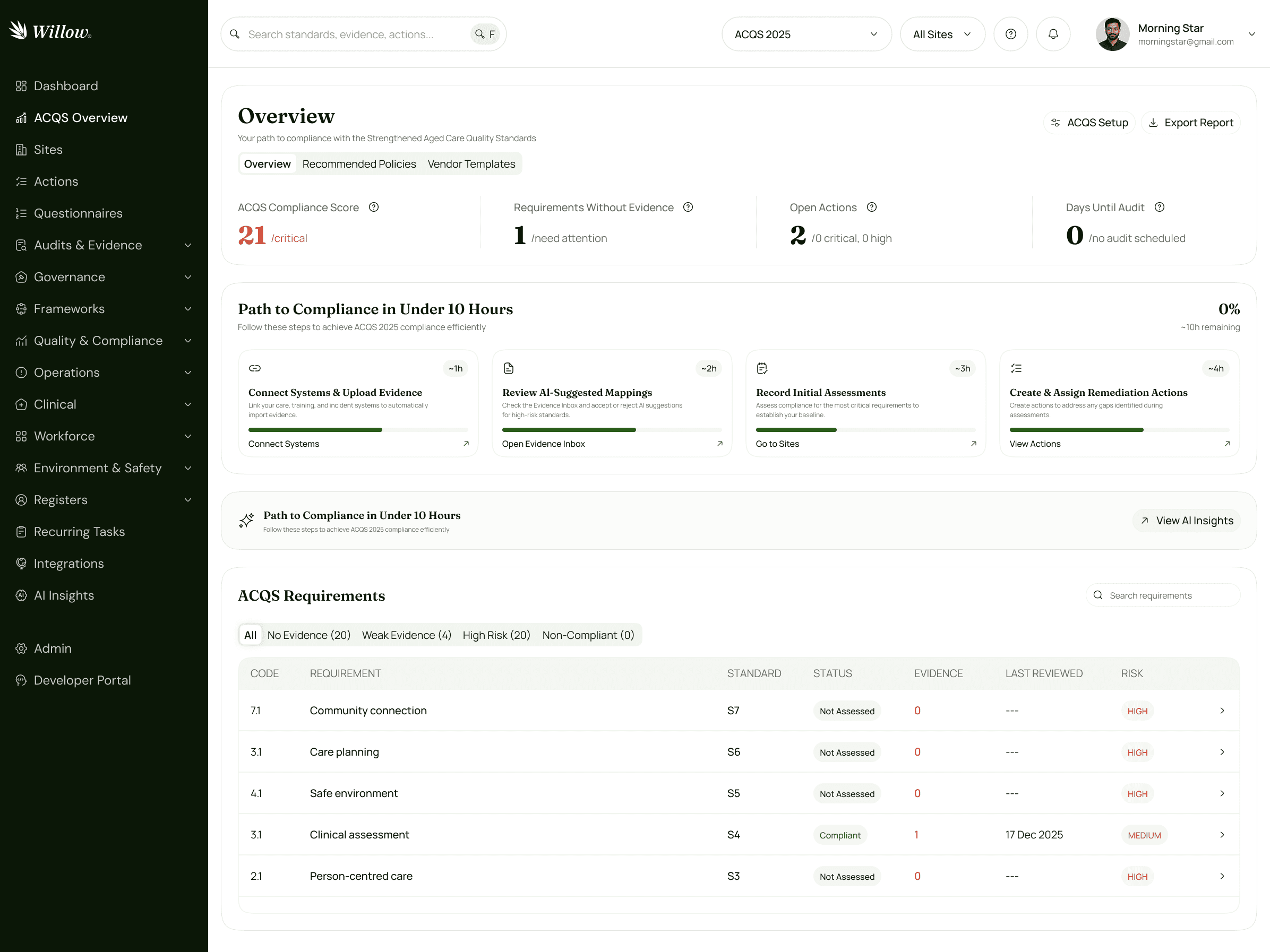
What is ACQS 2025?
What is ACQS 2025?
ACQS 2025 refers to the Strengthened Aged Care Quality Standards that will replace the existing Aged Care Quality Standards used in Australia.
ACQS 2025 refers to the Strengthened Aged Care Quality Standards that will replace the existing Aged Care Quality Standards used in Australia.
The new framework is part of the broader aged care reform program following the Royal Commission into Aged Care Quality and Safety.
The new framework is part of the broader aged care reform program following the Royal Commission into Aged Care Quality and Safety.
The goal of the strengthened standards is to:
Improve care quality and safety for older Australians
Strengthen accountability for providers
Ensure consistent governance across aged care organisations
Improve transparency and measurable outcomes
The updated framework places a stronger focus on:
Consumer rights and dignity
Clinical governance
Risk management
Workforce capability
Continuous improvement
Providers will be assessed against these standards during aged care accreditation and regulatory audits conducted by the Aged Care Quality and Safety Commission.
Providers will be assessed against these standards during aged care accreditation and regulatory audits conducted by the Aged Care Quality and Safety Commission.
The 7 Strengthened Aged Care Quality Standards
ACQS 2025 introduces seven updated Quality Standards that apply to aged care providers across Australia.
Each standard focuses on a key area of care delivery and organisational governance.
The Person
Stay audit-ready with structured accreditation management
Providers must demonstrate that care is:
Respectful of individual identity and culture
Responsive to personal goals and preferences
Delivered in partnership with the individual and their family
This standard reinforces the importance of person-centred care as the foundation of aged care services.
The Person
Stay audit-ready with structured accreditation management
Providers must demonstrate that care is:
Respectful of individual identity and culture
Responsive to personal goals and preferences
Delivered in partnership with the individual and their family
This standard reinforces the importance of person-centred care as the foundation of aged care services.
The Organisation
Standard 2 focuses on governance and organisational accountability.
Providers must demonstrate that they have systems in place to ensure:
Effective governance structures
Leadership oversight of care quality
Risk management frameworks
Compliance monitoring processes
This standard reinforces the importance of person-centred care as the foundation of aged care services.
The Organisation
Standard 2 focuses on governance and organisational accountability.
Providers must demonstrate that they have systems in place to ensure:
Effective governance structures
Leadership oversight of care quality
Risk management frameworks
Compliance monitoring processes
This standard reinforces the importance of person-centred care as the foundation of aged care services.
The Care and Services
This standard addresses how care and services are planned and delivered.
Providers must demonstrate that:
Care plans reflect individual needs
Services are coordinated effectively
Outcomes are monitored and reviewed
Evidence of effective care planning and monitoring becomes critical during audits.
The Care and Services
This standard addresses how care and services are planned and delivered.
Providers must demonstrate that:
Care plans reflect individual needs
Services are coordinated effectively
Outcomes are monitored and reviewed
Evidence of effective care planning and monitoring becomes critical during audits.
The Environment
Standard 4 relates to the physical and service environment in which care is delivered.
Providers must maintain environments that are:
Safe
Accessible
Comfortable
Supportive of wellbeing
Facilities must demonstrate that infrastructure and environments support quality care outcomes.
The Environment
Standard 4 relates to the physical and service environment in which care is delivered.
Providers must maintain environments that are:
Safe
Accessible
Comfortable
Supportive of wellbeing
Facilities must demonstrate that infrastructure and environments support quality care outcomes.
Clinical Care
Clinical care receives significantly stronger attention in the new standards.
Providers must demonstrate:
Safe clinical practices
Appropriate medication management
Infection prevention and control
Monitoring of health conditions
Documentation and evidence supporting clinical governance will play an important role in accreditation assessments.
Clinical Care
Clinical care receives significantly stronger attention in the new standards.
Providers must demonstrate:
Safe clinical practices
Appropriate medication management
Infection prevention and control
Monitoring of health conditions
Documentation and evidence supporting clinical governance will play an important role in accreditation assessments.
Food and Nutrition
Food and Nutrition
Providers must ensure that residents receive:
Nutritious meals
Choice in food options
Culturally appropriate food where relevant
Support for dietary needs
Providers must demonstrate systems for monitoring nutrition outcomes.
Food and Nutrition
Food and Nutrition
Providers must ensure that residents receive:
Nutritious meals
Choice in food options
Culturally appropriate food where relevant
Support for dietary needs
Providers must demonstrate systems for monitoring nutrition outcomes.
Providers must demonstrate systems for monitoring nutrition outcomes.
The final standard focuses on building supportive residential communities for residents.
Providers must demonstrate that facilities support:
Social connection
Participation in community life
Emotional wellbeing
This standard reinforces that aged care environments must support quality of life, not only clinical outcomes.
Providers must demonstrate systems for monitoring nutrition outcomes.
The final standard focuses on building supportive residential communities for residents.
Providers must demonstrate that facilities support:
Social connection
Participation in community life
Emotional wellbeing
This standard reinforces that aged care environments must support quality of life, not only clinical outcomes.
Key Changes from the Previous Aged Care Quality Standards
The strengthened standards introduce several structural changes compared with the previous framework.
Clearer Regulatory Expectations
The updated standards provide more detailed guidance on what regulators expect providers to demonstrate during audits.
This reduces ambiguity around compliance obligations.
Stronger Governance Requirements
Greater Focus on Measurable Outcomes
Improved Consumer Protection
Stronger Workforce Accountability
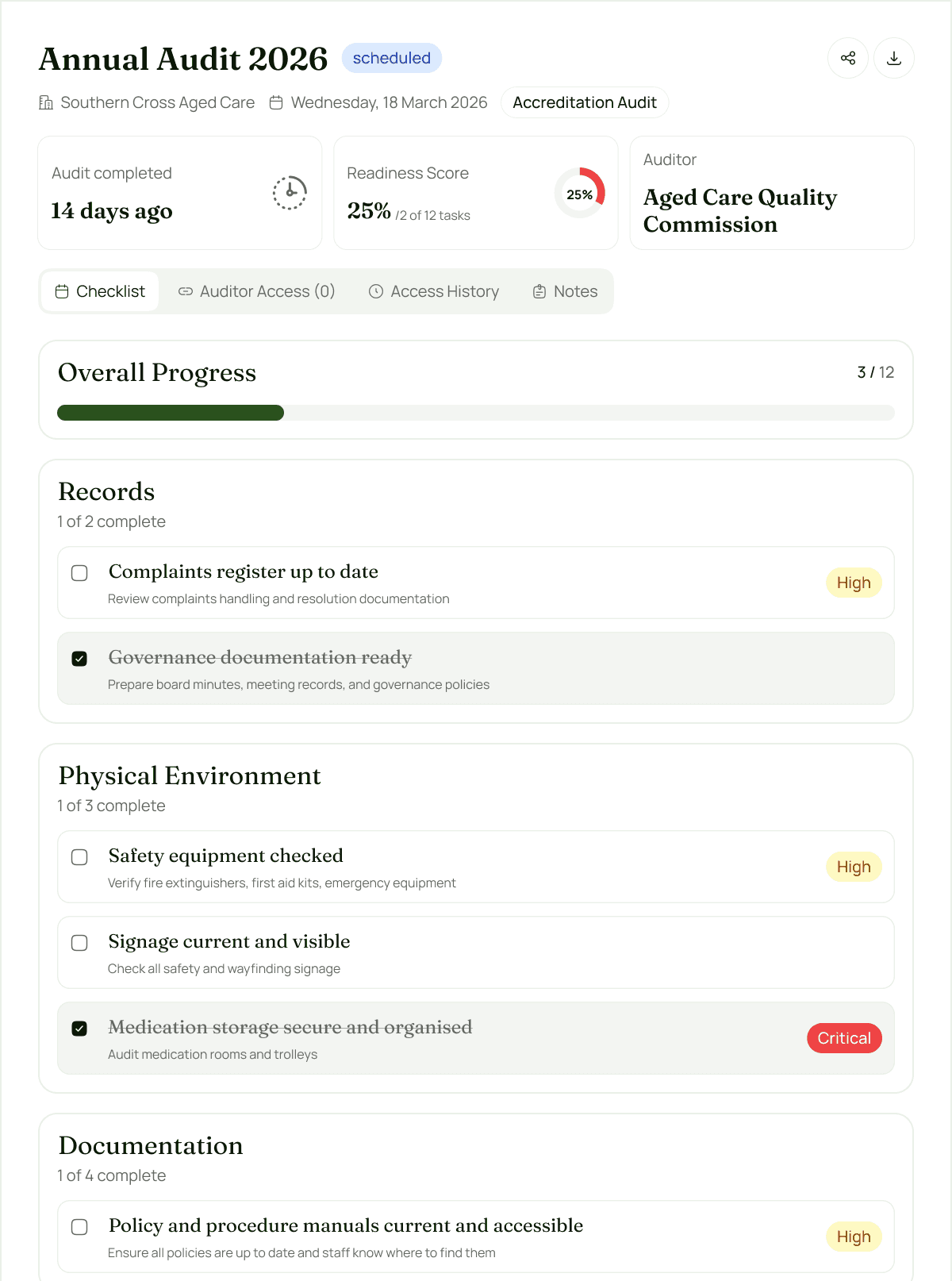
Key Changes from the Previous Aged Care Quality Standards
The strengthened standards introduce several structural changes compared with the previous framework.
Clearer Regulatory Expectations
The updated standards provide more detailed guidance on what regulators expect providers to demonstrate during audits.
This reduces ambiguity around compliance obligations.
Stronger Governance Requirements
Greater Focus on Measurable Outcomes
Improved Consumer Protection
Stronger Workforce Accountability
Key Changes from the Previous Aged Care Quality Standards
The strengthened standards introduce several structural changes compared with the previous framework.
Clearer Regulatory Expectations
The updated standards provide more detailed guidance on what regulators expect providers to demonstrate during audits.
This reduces ambiguity around compliance obligations.
Stronger Governance Requirements
Greater Focus on Measurable Outcomes
Improved Consumer Protection
Stronger Workforce Accountability
ACQS 2025 Timeline and Implementation
ACQS 2025 Timeline and Implementation
The strengthened standards are being introduced as part of the broader aged care reform program.
The strengthened standards are being introduced as part of the broader aged care reform program.
Key milestones include:
Key milestones include:
2023–2024
• Consultation and drafting of the strengthened standards
2025
• Implementation of the Strengthened Aged Care Quality Standards
From this point onward, aged care providers will be assessed against the new standards during regulatory audits.
Because compliance preparation can take significant time, many providers are already reviewing their systems to ensure readiness.
2024
• Publication of final framework guidance
How Aged Care Providers Can Prepare for ACQS 2025
Preparing for the strengthened standards requires more than updating policies.
Providers need structured systems for managing compliance across their organisation.
Key preparation steps include:
Review Current Compliance Frameworks
Providers should conduct an internal review of how current systems map to the new standards.
This often involves identifying gaps between existing documentation and the strengthened requirements.
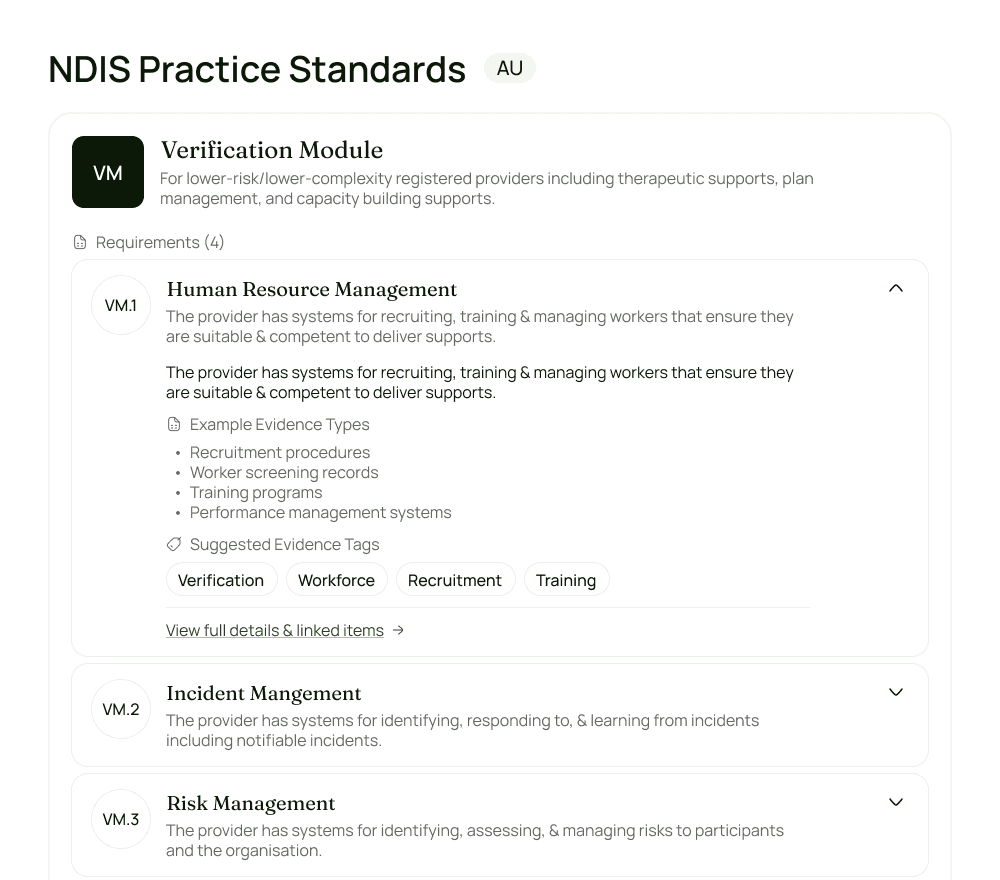
Review Current Compliance Frameworks
Providers should conduct an internal review of how current systems map to the new standards.
This often involves identifying gaps between existing documentation and the strengthened requirements.
Centralise Compliance Evidence
Evidence supporting compliance should be stored in a structured and accessible system.
This reduces the time required to prepare for regulatory audits.
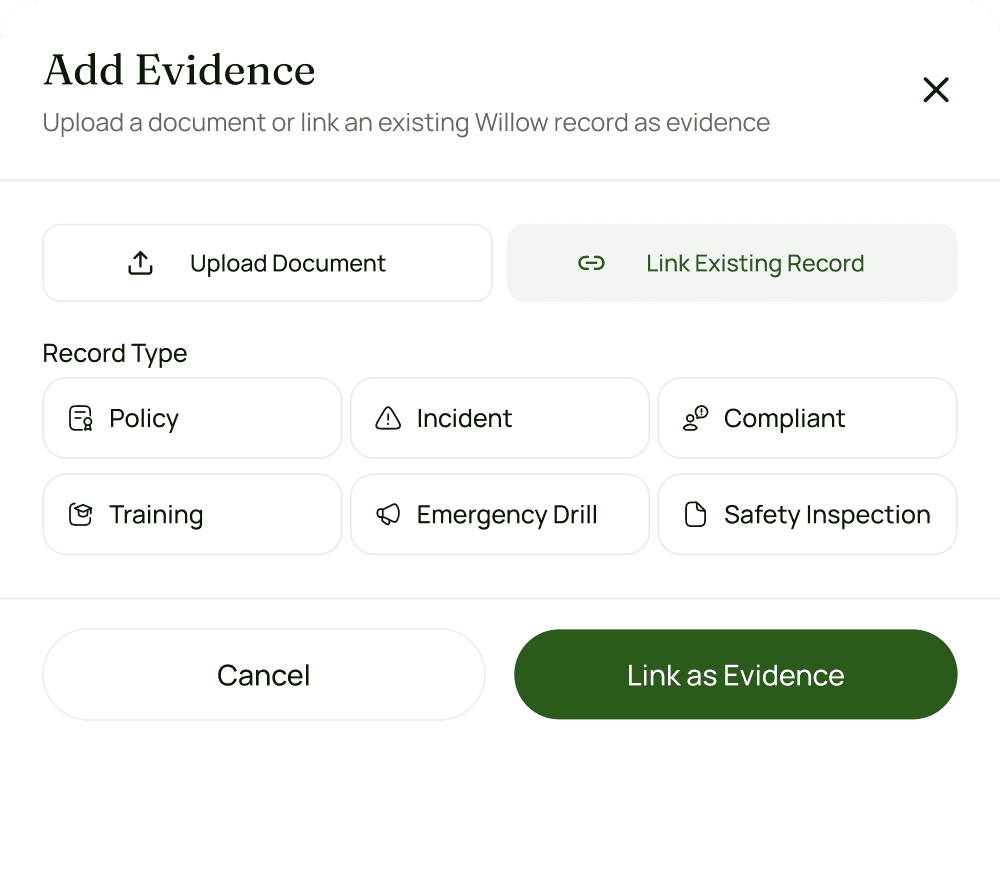
Centralise Compliance Evidence
Evidence supporting compliance should be stored in a structured and accessible system.
This reduces the time required to prepare for regulatory audits.
Strengthen Governance Oversight
Boards and leadership teams should implement regular compliance reporting processes.
Visibility into compliance performance is critical for regulatory readiness.
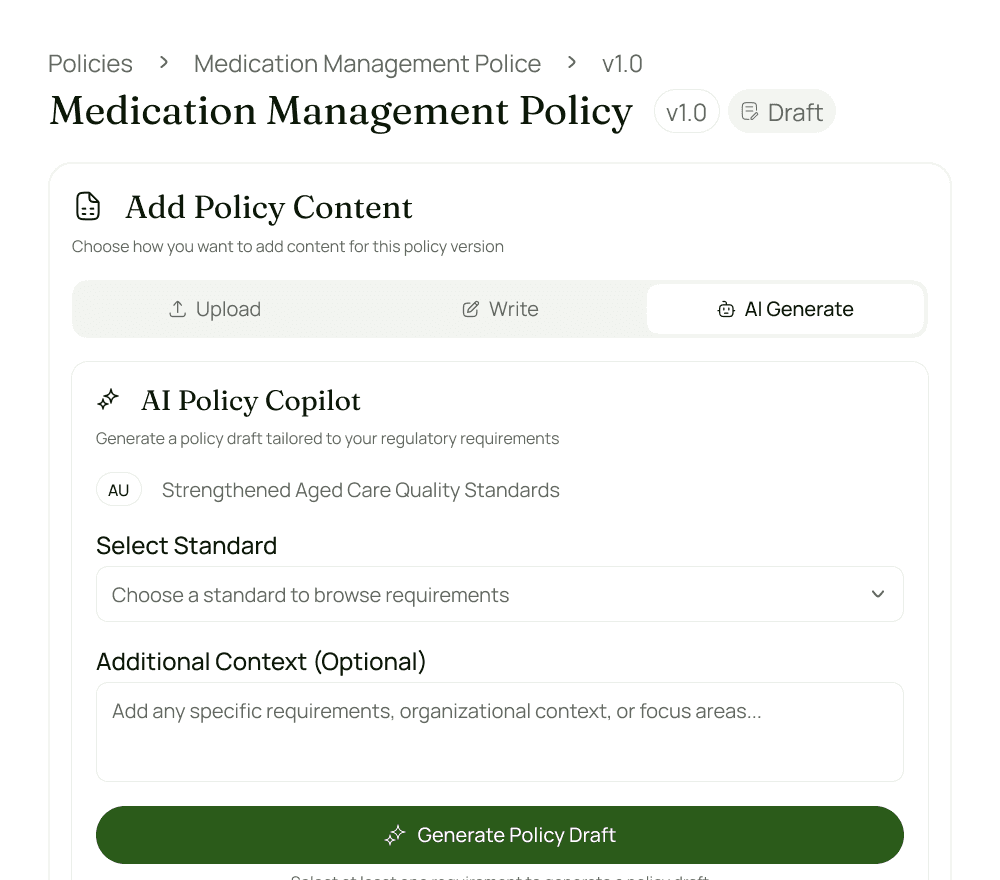
Strengthen Governance Oversight
Boards and leadership teams should implement regular compliance reporting processes.
Visibility into compliance performance is critical for regulatory readiness.
Improve Documentation and Monitoring
Providers should ensure that documentation supporting care delivery, clinical governance, and quality improvement is maintained consistently.
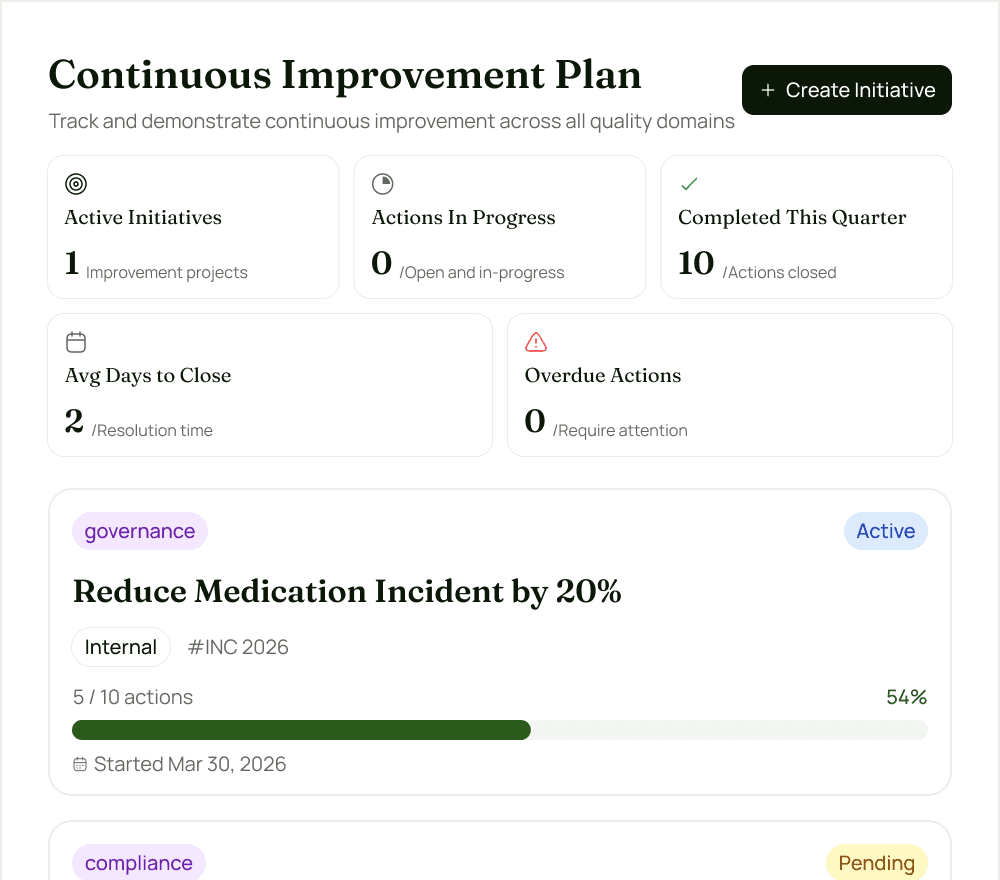
Improve Documentation and Monitoring
Providers should ensure that documentation supporting care delivery, clinical governance, and quality improvement is maintained consistently.
How Willow Helps Providers Prepare for ACQS 2025
How Willow Helps Providers Prepare for ACQS 2025
Willow is designed to help aged care providers manage compliance with complex regulatory frameworks such as the Strengthened Aged Care Quality Standards.
Willow is designed to help aged care providers manage compliance with complex regulatory frameworks such as the Strengthened Aged Care Quality Standards.
The platform acts as a central compliance intelligence layer, connecting operational systems, evidence, and regulatory requirements into a single environment.
The platform acts as a central compliance intelligence layer, connecting operational systems, evidence, and regulatory requirements into a single environment.
Key capabilities include:
Key capabilities include:
Frequently asked questions
Frequently asked questions
Find answers to common questions about Willow and how it can benefit your business
Find answers to common questions about Willow and how it can benefit your business
What does ACQS stand for?
ACQS refers to the Aged Care Quality Standards, the regulatory framework used to assess aged care providers in Australia.
The strengthened version of these standards is commonly referred to as ACQS 2025.
When will ACQS 2025 start?
Who must comply with ACQS 2025?
What happens if a provider does not meet the standards?
What does ACQS stand for?
ACQS refers to the Aged Care Quality Standards, the regulatory framework used to assess aged care providers in Australia.
The strengthened version of these standards is commonly referred to as ACQS 2025.
When will ACQS 2025 start?
Who must comply with ACQS 2025?
What happens if a provider does not meet the standards?
ACQS 2025 Preparation Checklist
Preparing for the strengthened standards requires planning across governance, operations, and documentation.
Download our ACQS 2025 Readiness Checklist to see the key steps providers should take to prepare for the new framework.
The checklist covers:
Governance preparation
Compliance documentation
Audit readiness
Operational monitoring
Staff training requirements