
The Future of Aged Care Compliance Under ACQS 2025: What Providers Must Know
Compliance
31 July 2026
The Strengthened Aged Care Quality Standards (ACQS 2025) are reshaping compliance oversight in Australia. What the regulatory reforms mean for provider governance and operations.
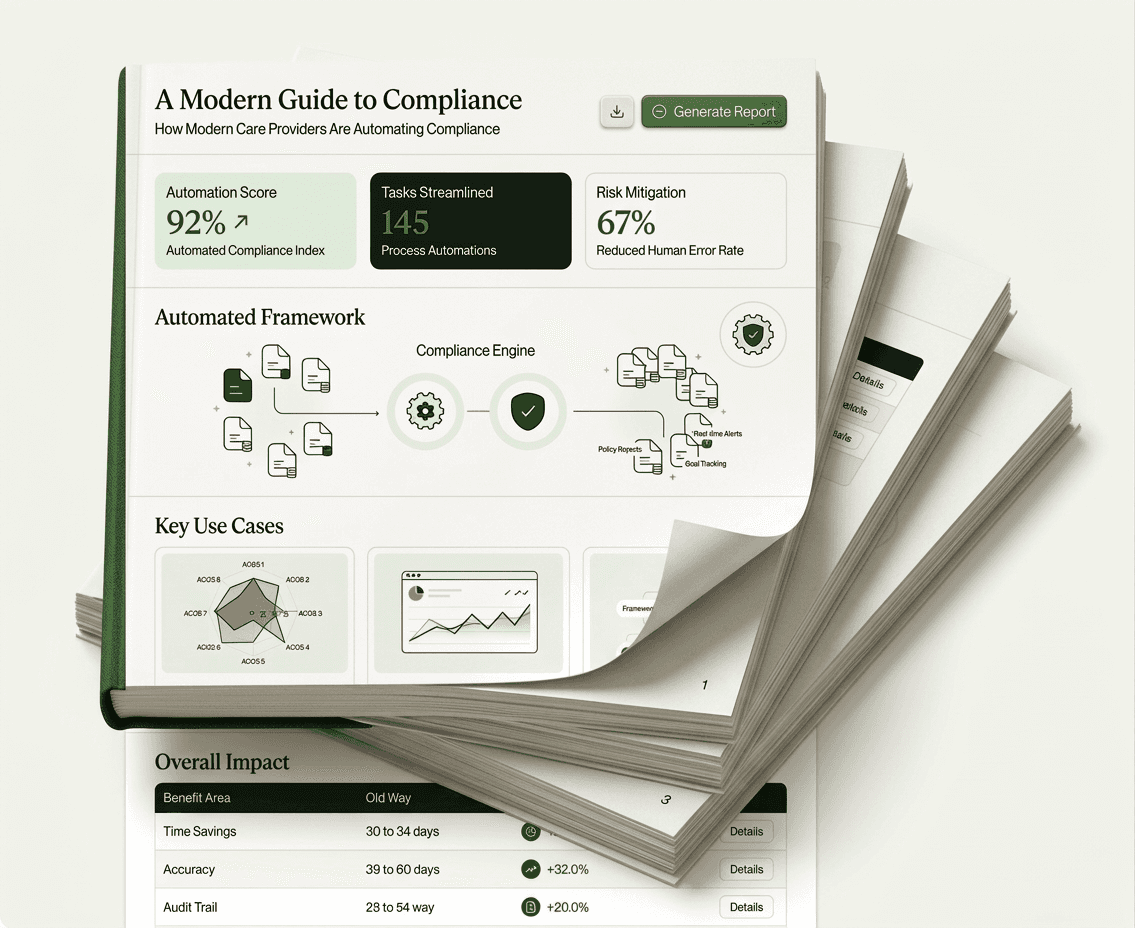
The Aged Care quality standards (ACQS) 2025 represent the most significant overhaul of aged care regulation in Australia since the Royal Commission. Moving from four standards to eight, introducing explicit consumer outcome focus, and tightening governance expectations, the new framework demands a fundamentally different approach to compliance. For providers still operating under the old model, the transition isn't optional — and the window for preparation is closing. Here's what you need to know, what's changed, and how to position your organisation for success.
The Big Picture: Why the Standards Were Rewritten
The existing Aged Care quality standards had been in place since July 2019. While they represented progress at the time, the Royal Commission into Aged Care Quality and Safety exposed fundamental gaps in how quality was defined, measured, and enforced across the sector.
The Commission's final report made 148 recommendations. Among the most impactful was the call for strengthened quality standards that placed the older person at the centre of every requirement. The result is the ACQS 2025 framework, which shifts the regulatory philosophy in three critical ways:
From provider-centric to person-centric — Standards are now framed around outcomes for the older person, not processes performed by the provider
From compliance minimums to quality expectations — The standards set a higher bar, expecting providers to demonstrate not just safety but genuine quality of life
From episodic assessment to continuous accountability — Providers must demonstrate ongoing compliance, not just point-in-time readiness
This isn't a cosmetic rebrand. The language, structure, and expectations are materially different. Providers who assume they can map their current systems to the new framework with minimal change are likely to find themselves caught out.
The strengthened standards also connect to broader reforms including the new Aged Care Act (effective 1 July 2025), the strengthened SIRS, mandatory care minutes, and the Star Ratings system. Together, these create an accountability ecosystem that is more demanding, more transparent, and more consequential than anything the sector has previously faced.
The Eight Standards: Structure and Scope
The ACQS 2025 expands from four quality standards to eight, each with defined outcomes, requirements, and quality indicators. Understanding the structure is essential for mapping your compliance systems.
Standard 1: The Person. This is foundational — it requires that each person receiving care is treated as an individual with rights, identity, and agency. It covers informed consent, dignity of risk, cultural safety, and the person's right to make decisions about their own care.
Standard 2: The Organisation. This addresses the provider's systems, workforce, and governance at an organisational level. It includes workforce planning, information management, risk management, and compliance systems.
Standard 3: Care and Services. The core clinical and personal care standard, covering assessment, care planning, clinical care, daily living support, and allied health services.
Standard 4: The Environment. Covers the physical environment including safety, comfort, accessibility, and the maintenance of buildings and equipment.
Standard 5: Clinical Care. A dedicated standard for clinical care delivery including medication management, infection prevention, wound care, palliative care, and minimising restrictive practices.
Standard 6: Food and Nutrition. Elevated to its own standard (previously embedded within Standard 4 of the 2019 framework), reflecting the Royal Commission's emphasis on nutrition as a quality-of-life issue, not just a clinical one.
Standard 7: The Residential Community. Addresses the social and community aspects of residential care — activities, social connection, spiritual needs, and community engagement.
Standard 8: Organisational Governance. The capstone standard, requiring effective governance, leadership accountability, quality improvement, and open disclosure. Governing body members have explicit duties under this standard.
Each standard includes both 'core requirements' (the minimum for compliance) and 'aspirational outcomes' (the vision for quality). Providers should aim beyond the minimum — regulatory expectations will progressively lift over time.
What's Genuinely New Versus Repackaged
Not everything in ACQS 2025 is new. Some elements are reframed versions of existing requirements. But several areas represent genuinely new or significantly heightened expectations that providers must address.
Genuinely new or significantly strengthened areas include:
Dignity of risk (Standard 1). The concept that older people have the right to make choices that involve risk — and that providers must support informed choice rather than default to restriction. This challenges deeply embedded risk-averse cultures in many facilities.
Cultural safety (Standard 1). Goes beyond cultural awareness to require that care is delivered in a way that is culturally safe for Aboriginal and Torres Strait Islander peoples and people from culturally and linguistically diverse backgrounds. This requires workforce training, community engagement, and systems adaptation.
Food and nutrition as a standalone standard (Standard 6). The separation of food and nutrition into its own standard signals regulatory intent. Providers need to demonstrate not just adequate nutrition but quality food services, mealtime experience, and nutritional monitoring — including for residents with dysphagia, cultural dietary requirements, and end-of-life nutrition preferences.
Governing body accountability (Standard 8). Board members and equivalent roles now have explicit, personal accountability for care quality under both the quality standards and the strengthened Aged Care Act. This means governance cannot be delegated entirely to management — boards must demonstrate active oversight.
Repackaged but important to revisit:
Clinical care requirements (Standard 5) largely mirror existing clinical governance expectations but with greater specificity around antimicrobial stewardship, restrictive practices, and palliative care. If your systems are mature in these areas, the transition is manageable. If they're weak, the new standard makes the expectation more explicit and harder to avoid.
continuous improvement (Standard 8) was always expected but is now structured more rigorously with clearer links to the QI Program requirements.
Mapping Your Current Systems to the New Framework
The first practical step for any provider is a structured mapping exercise: take your current compliance evidence, policies, and processes and map them against the ACQS 2025 requirements to identify gaps.
This exercise typically reveals three categories:
Direct translations. Some areas map cleanly from the old standards to the new. Your medication management policies, clinical assessment frameworks, and incident management systems likely address most of Standard 5's requirements, though you may need to strengthen specific areas.
Partial coverage. Many areas are partially addressed by current systems but need enhancement. For example, you probably have care planning processes that cover Standard 3, but the person-centred expectations of Standard 1 may require a significant rethink of how residents are involved in planning their own care.
Net new requirements. Some areas require entirely new systems or approaches. If you haven't previously had a structured approach to cultural safety (Standard 1), dignity of risk frameworks, or standalone food and nutrition quality monitoring (Standard 6), these need to be built from scratch.
Practical mapping approach:
Create a standard-by-standard matrix with each requirement listed
For each requirement, identify your current evidence source (policy, procedure, data, documentation)
Rate each as Green (fully addressed), Amber (partially addressed), or Red (gap)
Prioritise Red items for immediate action and Amber items for enhancement
Assign ownership for each gap to a specific person with a specific deadline
Don't try to do this mapping in isolation. Involve clinical leaders, frontline staff, and if possible, residents and families. Different perspectives will identify gaps that a top-down desk exercise misses.
The Governance Uplift: What Boards Need to Understand
Perhaps the most consequential change in ACQS 2025 is the explicit accountability placed on governing bodies. Under the strengthened Aged Care Act, members of the governing body (directors, board members, or equivalent) have personal duties regarding the quality and safety of care.
This fundamentally changes the board's relationship with compliance. It's no longer sufficient for a board to receive a management report saying 'we're compliant' and move to the next agenda item. The standard expects governing body members to:
Understand the quality and safety obligations of the organisation — not in abstract terms but in operational detail
Access and review quality and safety data directly — not just management interpretations of that data
Satisfy themselves that care is safe, quality is maintained, and risks are managed — through independent assurance mechanisms, not just management assurances
Take action when quality or safety concerns are identified — with documented evidence of their response
For many providers, especially smaller organisations where governance has been relatively informal, this requires a significant uplift in governance capability. Board members may need:
Education on the aged care quality framework and their specific obligations. clinical governance training so they can meaningfully interpret quality data. Access to real-time or near-real-time quality dashboards rather than quarterly board reports. Independent assurance mechanisms such as internal audit or clinical governance walkrounds.
The Commission has signalled that it will assess governance effectiveness not just through documentation review but through direct interviews with governing body members. Board members who cannot articulate how they fulfil their quality oversight role create a significant compliance risk for the organisation.
Start these conversations with your board now. The worst time to discover your governance model is inadequate is during an assessment contact.
Person-Centred Care: Moving From Rhetoric to Reality
Every aged care provider claims to deliver person-centred care. Under ACQS 2025, the Commission will test whether that claim reflects reality.
Standard 1 (The Person) sets expectations that go well beyond putting a resident's photo on their door and asking their food preferences. Genuine person-centred care under the new framework means:
The person is an active participant in decisions about their care. Not consulted after decisions are made, but involved in making them. Care plan meetings aren't presentations to the resident and family — they're collaborative planning sessions where the person's goals and preferences drive the plan.
The person's identity is respected and supported. This includes cultural identity, spiritual beliefs, gender identity, sexual orientation, and social connections. A facility that provides excellent clinical care but strips away the individual's identity is not meeting Standard 1.
Dignity of risk is genuinely practised. If a resident with a falls history wants to walk independently to the garden, the default response shouldn't be restriction. It should be risk assessment, informed consent, and supportive risk mitigation. This requires a cultural shift in many facilities where risk aversion has been the dominant approach.
Consent is informed and ongoing. Consent to care isn't a form signed on admission. It's a continuous process of checking that the person understands and agrees to the care they're receiving, with particular attention to residents with cognitive impairment and their substitute decision-makers.
Making this real requires more than policy changes. It requires:
Training that helps staff understand person-centred care in practical, daily terms
Care planning templates and processes that prompt genuine individualisation
Systems that capture and make accessible each person's preferences, history, and goals
Time — person-centred care takes longer than task-oriented care, and staffing models need to reflect this
The providers who will excel under Standard 1 are those who have been genuinely pursuing person-centred care for years. Those who have been using the language without the substance will need to make rapid, meaningful changes.
Clinical Care and Restrictive Practices: Heightened Scrutiny
Standard 5 (Clinical Care) consolidates and strengthens clinical expectations with particular focus on areas the Royal Commission identified as problematic: medication management, infection prevention, wound care, and the use of restrictive practices.
Restrictive practices are under the most intense scrutiny. The ACQS 2025 framework, combined with the strengthened SIRS and the Aged Care Act, creates a comprehensive regulatory web around restrictive practices:
Any restrictive practice must be authorised in accordance with state/territory legislation and documented in a behaviour support plan. The plan must demonstrate that restrictive practices are used as a last resort after less restrictive alternatives have been genuinely trialled. Regular review (at least every 12 months, but more frequently is expected) must assess whether the restrictive practice is still necessary. There must be a demonstrated pathway toward reducing and eliminating restrictive practices where possible.
Providers should audit their current restrictive practices immediately:
How many residents currently have restrictive practices in place?
Does each have a current, comprehensive behaviour support plan?
Are less restrictive alternatives documented as having been trialled?
When was each practice last reviewed, and by whom?
Are families and substitute decision-makers informed and involved?
Medication management under Standard 5 also receives enhanced attention. Psychotropic medications used to manage behaviour (often classified as chemical restraint) require particular vigilance. The Commission expects providers to demonstrate regular medication reviews, particularly for antipsychotics, benzodiazepines, and other psychotropic medications.
Infection prevention and control, elevated in importance since COVID-19, now has explicit requirements including IPC governance, outbreak preparedness, antimicrobial stewardship, and staff IPC competence. Providers should ensure their IPC programs go beyond COVID-specific measures to address the full spectrum of infection risks in aged care.
The QI Program Requirement and Continuous Improvement
ACQS 2025 Standard 8 requires providers to maintain a Quality Improvement (QI) Program. This isn't new — the 2019 standards expected continuous improvement — but the specificity of the requirement has increased significantly.
A compliant QI Program under the new framework needs to demonstrate:
Systematic identification of improvement opportunities. This means structured processes for identifying what needs to improve, drawing on multiple data sources: clinical indicators, incident data, complaints, consumer feedback, audit results, and benchmarking data. Ad hoc improvement driven by individual champions isn't sufficient.
Prioritisation and planning. Not every improvement opportunity can be pursued simultaneously. The QI Program should demonstrate how priorities are set — typically based on risk to consumers, regulatory requirements, and alignment with organisational strategy — and how improvement projects are planned with clear objectives, timelines, and accountabilities.
Implementation and monitoring. Improvement initiatives need to be tracked from planning through implementation to outcome measurement. This is where many providers fall down — they start initiatives but don't follow through to measure whether they actually improved anything.
Sustainability. The QI Program must demonstrate that improvements are sustained over time, not just achieved and then gradually eroded. This requires embedding changes into standard procedures, training, and monitoring systems.
The QI Program should also connect to the National Aged Care Mandatory Quality Indicator Program (QI Program), which requires residential providers to report on specified quality indicators including pressure injuries, falls, unplanned weight loss, physical restraint, and medication management.
Practical tips for strengthening your QI Program:
Establish a regular QI review cycle (monthly at minimum) with defined agenda, data review, and action tracking
Involve frontline staff in identifying improvement opportunities — they see issues that management doesn't
Use structured improvement methodologies (PDSA cycles are fit for purpose in aged care) rather than ad hoc approaches
Document everything — the QI Program is only as strong as the evidence trail it creates
Report QI progress to the governing body regularly, connecting improvement activities to quality outcomes
Practical Transition Timeline: What to Do and When
With the strengthened standards taking effect in 2025, providers need a structured transition plan. Here's a practical timeline based on what I'm seeing work for the organisations that are ahead of the curve.
Immediate (now through next 8 weeks):
Complete the mapping exercise — identify your gaps against each of the eight standards
Brief your governing body on the new standards and their personal accountability obligations
Identify your three highest-risk gap areas and begin remediation planning
Review all restrictive practices documentation against the new framework requirements
Short-term (2-4 months):
Begin governance uplift — board education, enhanced reporting, independent assurance mechanisms
Redesign care planning processes to embed genuine person-centred approaches (Standard 1)
Establish or strengthen your QI Program with systematic data collection and improvement tracking
Develop a food and nutrition quality framework if you don't have one (Standard 6)
Medium-term (4-8 months):
Roll out staff training on the new standards with practical, role-specific content
Implement enhanced clinical governance with data dashboards and regular governance review cycles
Build cultural safety capability through community engagement and workforce training
Test your compliance posture with internal mock assessments using the new framework
Ongoing:
Monitor regulatory guidance from the ACQSC as they publish assessment tools and guidance materials
Participate in sector forums and peer networks to share transition learnings
Continuously review and refine your systems as you learn what works in practice
The transition to ACQS 2025 is demanding but achievable. Providers who start early, invest in genuine capability building (not just paper compliance), and leverage technology to manage the increased complexity will be well-positioned. Those who wait until the last minute will find themselves in the same reactive scramble that the new standards were designed to eliminate.
The future of aged care compliance in Australia is continuous, transparent, and outcomes-focused. The providers who embrace that future will not only meet regulatory requirements — they'll deliver genuinely better care.
Written by

James Driscoll
Writer
Community Manager for Willow , heywillow.ai. Helping healthcare, aged care, and NDIS providers ditch the compliance spreadsheets for AI-powered intelligence.
Latest Articles & Guides
Stay informed with the latest guides and news.


Ready to Move From Reactive to Continuous Compliance?
See how Willow supports structured governance, real-time monitoring, and audit-ready operations.